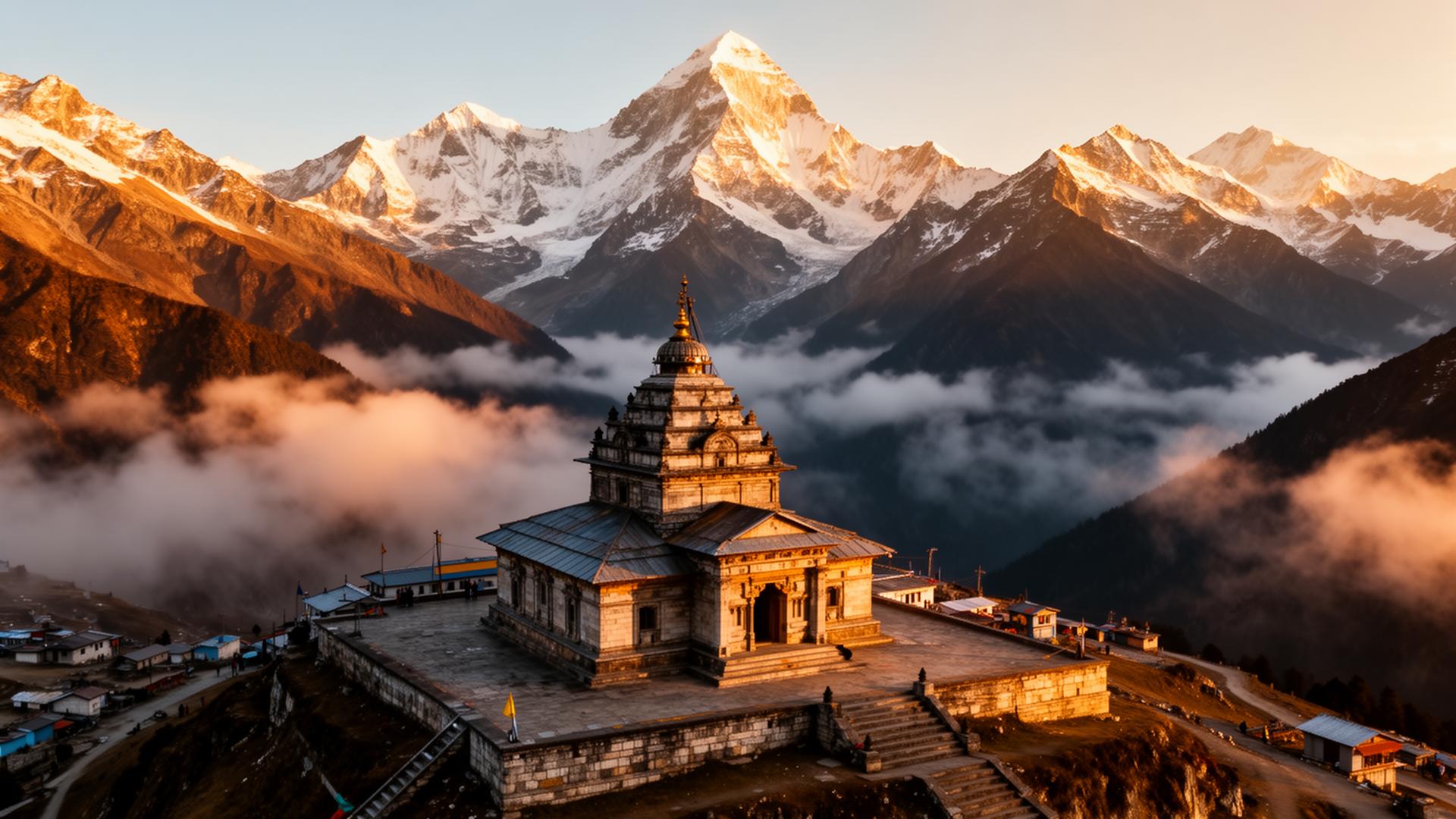
Dham of the Chardham circuit
Kedarnath Dham
The northernmost jyotirlinga, standing alone before a wall of snow
Altitude
3,583 m (11,755 ft)
Location
Rudraprayag district, Uttarakhand
Best time
May to June, September to October
Open
End April / early May → Bhai Dooj (October / November)
About Kedarnath Dham
Kedarnath Dham, one of the twelve jyotirlingas of Lord Shiva, sits in a U-shaped glacial valley at the head of the Mandakini. The thousand-year-old stone temple — credited to Adi Shankaracharya in its present form — is reached by a 16 km trek from Gaurikund or a short helicopter shuttle from Phata, Sersi, or Guptkashi.
Religious significance
Kedarnath is associated with the Pandavas' search for Shiva after the Mahabharata war. Of the Panch Kedar, it is the most revered, and the only Chardham site dedicated to Shiva.
How to reach
Reach Gaurikund by road via Rudraprayag and Guptkashi (about 215 km from Rishikesh). From Gaurikund the 16 km trek climbs to Kedarnath; alternatively, helicopter services operate from Phata, Sersi, and Guptkashi with online booking through the official IRCTC heliyatra portal.
Darshan timings
Morning darshan from 04:00; afternoon break 15:00 – 17:00; evening aarti around 18:30
Weather
Cold even in summer (5–15°C day, near freezing at night); altitude-related discomfort is common — acclimatise in Guptkashi or Sonprayag before ascending.
Nearby places
- Bhairavnath temple
- Shankaracharya samadhi
- Vasuki Tal trek
- Triyuginarayan temple
FAQs about Kedarnath Dham
Is the Kedarnath helicopter service worth it?
For travellers short on time or unable to trek 16 km at altitude, yes — it cuts a punishing day-long trek into a 7–10 minute flight, though weather can cause same-day delays or cancellations.
Where is helicopter booking done officially?
All Kedarnath heli tickets must be booked through the IRCTC heliyatra portal. We assist with planning around your flight slots.
How fit do I need to be for the trek?
A reasonable level of fitness is required for the 16 km uphill trek. Start daily walks 4–6 weeks before the yatra and pace yourself in 3 stages on the day of the climb.